

You wash the car, park it in the driveway, and an hour later the paint and glass are covered in little white rings. Or the sprinklers catch the side of your car overnight and leave a speckled pattern that won’t come off with a quick wipe. Those are hard water spots, and they are one of the most common complaints we hear from Santa Clarita drivers.
This guide is for owners of cars that do not have a ceramic coating. It covers why the spots form, how to tell a fresh deposit from damage that has gone into the clear coat, what you can safely try at home, and when it makes sense to have a professional take a look. If your car is already coated, our separate guide on removing water spots from a ceramic-coated car is the better place to start.
Why hard water spots form
Tap water carries dissolved minerals, mostly calcium and magnesium. When a droplet sits on your paint and evaporates, the water leaves but the minerals stay behind as a dry ring. Much of the water in the Santa Clarita Valley is on the hard side, so these deposits show up quickly, especially from:
- Sprinklers and irrigation overspray. Parking next to a lawn or planter is the classic cause. The same spot gets wet and dries again night after night.
- Washing in direct sun. Warm panels make water evaporate before you can dry it.
- Air-drying after a wash. Letting the car drip dry, or driving it “to blow it off,” leaves droplets to dry in place.
- Rain mixed with dust. Light rain on a dusty car can leave spotty residue as it dries, which we cover in our rainy season car care guide.
Heat speeds everything up. A dark car sitting in the afternoon sun can bake a mineral ring onto the surface much faster than a light-colored car parked in the shade.
Three stages of water spotting
Not all water spots are the same. Detailers often think about them in three rough stages, and the stage tells you what kind of fix is realistic.
Stage 1: Surface mineral deposits
These are fresh rings sitting on top of the paint. They often feel slightly rough under a clean fingertip and may fade when the panel is wet. A proper wash, a dedicated water spot remover or a mild mineral-dissolving cleaner usually takes care of them.
Stage 2: Bonded deposits
When minerals sit for days or weeks, especially in heat, they bond more tightly to the surface. A normal wash won’t move them. These often need a chemical water spot treatment, and sometimes a clay bar treatment to lift what’s left.
Stage 3: Etching
If deposits stay long enough, they can etch a shallow outline into the clear coat. At this point you’re not looking at something on the paint anymore, but a mark in it. Chemicals and clay won’t fix etching. It usually takes machine polishing to level the clear coat around the mark, and deep etching may not be fully removable.
A simple test: after washing and drying, look at the spot under a bright light from a few angles. If you can see the ring but can’t feel anything with a clean fingertip, and it looks like a faint crater, it’s likely etched.
How to safely remove hard water spots at home
If the spots are fresh, you can often handle them yourself. Work slowly and gently, because aggressive scrubbing causes more damage than the spots ever will.
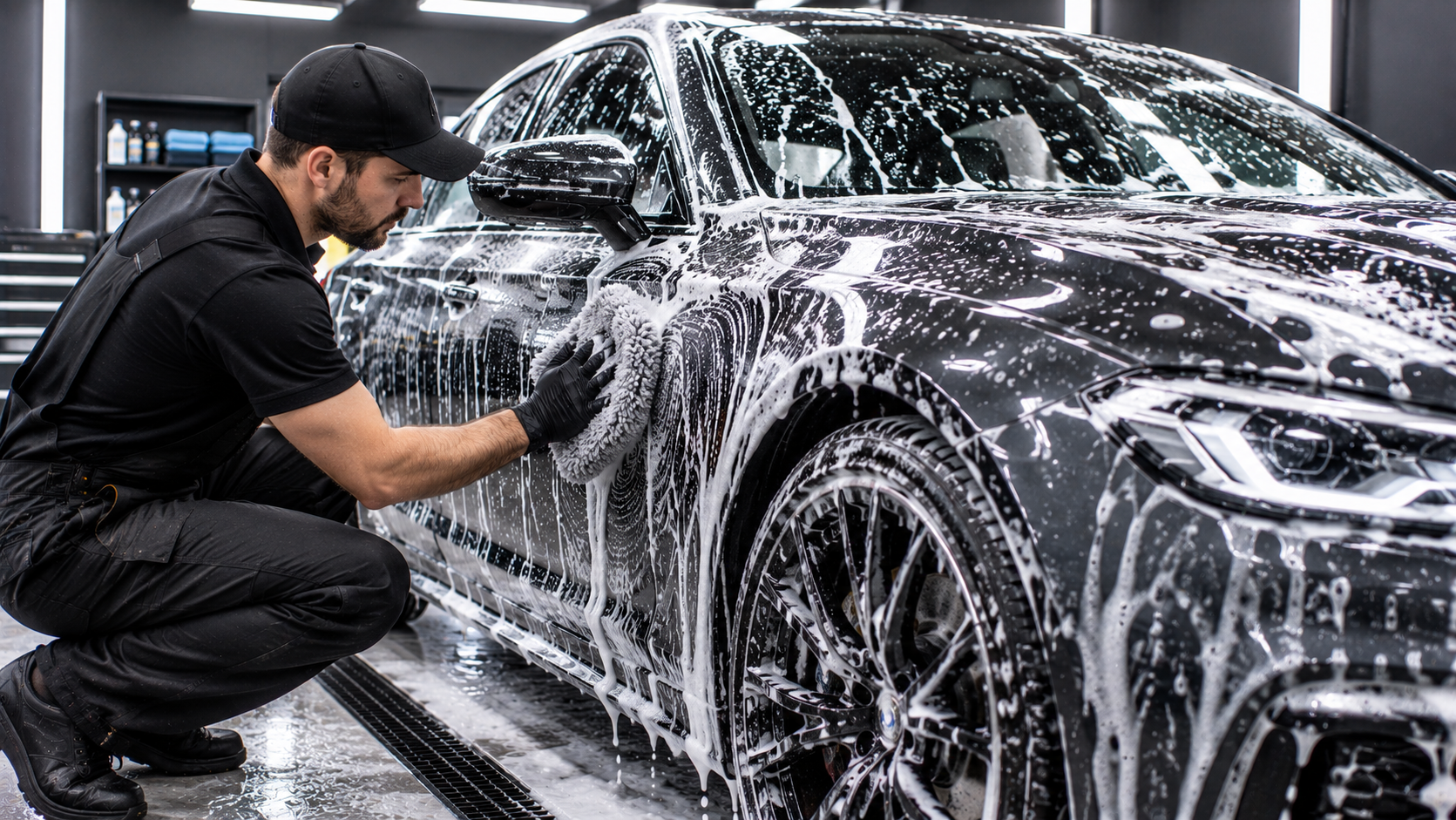
- Wash first. Use a proper car shampoo and two buckets so you aren’t grinding dirt into the paint. Rinse and dry with clean microfiber towels.
- Work in the shade on a cool panel. Never treat spots on a hot hood.
- Try a dedicated water spot remover. Products made for automotive paint are formulated to dissolve minerals without being harsh. Follow the label, work one small section at a time, and rinse or wipe off as directed.
- Consider a diluted vinegar solution with care. Many owners use a mix of distilled white vinegar and distilled water for light deposits. Test on a small, hidden area first, don’t let it dry on the paint, and rinse well afterward. Avoid it on hot surfaces and on fresh or damaged paint.
- Don’t forget the glass. Windows and mirrors spot too, and glass is usually more forgiving. A glass-safe water spot remover works well. Be careful around window tint, which should only be cleaned on the inside with tint-safe products. Our window tinting page has more on caring for tinted glass.
- Protect the paint afterward. Removing minerals can also strip wax or sealant, so add a layer of protection once the panel is clean.
What to avoid: household scrub pads, abrasive cleaners, undiluted acids, and “magic” erasers. These can haze or scratch the clear coat and turn a Stage 1 problem into a polishing job.
When to call a professional
It’s time to get help when spots stay after a careful chemical treatment, when you can see outlines in the paint after washing, or when the spots cover large areas like the hood, roof and doors. A professional can inspect the paint, test the least aggressive method first, and decide whether decontamination or polishing is actually needed.
Our mobile auto detailing service handles washing, decontamination and protection at your home or office. If the paint needs machine polishing to reduce etching, that’s paint correction work, which is quoted separately after we see the condition of the vehicle.
How to prevent hard water spots
Prevention is easier than removal. A few habits make a big difference:
- Move the car or adjust the sprinklers. If your car gets hit by irrigation, change the spray pattern or park somewhere else. This one change solves most chronic spotting.
- Wash early or late in the day. Cooler panels give you time to dry the car before water evaporates.
- Dry right away. Use a large, plush drying towel or a blower. Don’t let the car air-dry.
- Use a final rinse of filtered or deionized water if you wash at home often. It leaves far fewer minerals behind.
- Keep a layer of protection on the paint. Wax, sealant or a coating makes the surface slicker, so water and minerals are easier to remove before they bond.
Does ceramic coating stop water spots?
A ceramic coating makes the paint easier to clean and helps water sheet off, but it does not make a car spot-proof. Minerals can still dry on a coated surface. The difference is that deposits usually sit on the coating instead of the clear coat, so they’re easier to deal with when you catch them early. Our ceramic coating is applied at the shop, not as a mobile service. For drivers who also want physical protection from rock chips, paint protection film is another option to discuss.
Frequently asked questions
Are hard water spots permanent?
Not usually, if you catch them early. Fresh mineral deposits come off with the right cleaner. Spots become harder to remove the longer they sit, and etched spots need polishing.
Can a regular car wash remove water spots?
A wash removes loose dirt and some very fresh spots, but bonded minerals usually need a dedicated remover or a decontamination step.
Is it safe to use vinegar on car paint?
Diluted vinegar is a common home approach for light deposits, but test it first, keep the panel cool, don’t let it dry and rinse thoroughly. If you’re unsure, use a product made for automotive paint.
Why do my windows get spots right after I wash the car?
Usually because the water dries before you do. Washing in the shade and drying glass first helps a lot.
Get help with stubborn water spots
If your car has spots that won’t budge, or you’re not sure whether they’ve etched the paint, contact Pristine Auto Care and describe what you’re seeing. We serve drivers across the Santa Clarita Valley and nearby areas and can help you choose the gentlest fix that works.