

Santa Clarita does not get much rain, but when it does arrive, it rarely arrives gently. Most of our wet weather lands between late fall and early spring, often in a few short, heavy storms separated by long dry stretches. That pattern is hard on a car’s finish, glass and interior in ways many drivers do not expect. A little rainy season car care in Santa Clarita goes a long way toward keeping your vehicle looking good and driving safely until the dry season returns.
This guide covers what rain actually does to your car here in the Santa Clarita Valley, a simple routine for the wet months, and when it makes sense to bring in a professional.
Why the first storm of the season is the dirtiest
After months without rain, dust, pollen, brake dust, soot and road film build up on every surface, including the air above the valley. The first real storm pulls much of that down and onto your car. When those drops dry, they leave behind a gritty film and spots that are often more noticeable than the dust that was there before.
Freeway driving on the 5 and the 14 adds another layer. Wet roads throw up an oily mix of tire residue, fluids and grime that sticks to lower panels, wheels and the rear of SUVs and hatchbacks. That is why a car can look worse after a rainy commute than after a dry week.
What rain leaves behind on your paint
Rainwater itself is not the problem. The problem is what it carries and what is left once it evaporates.
- Mineral and contaminant spots. Drops dry into rings of dust and minerals. Left for weeks, they can etch into an unprotected clear coat.
- Road film on lower panels. Rocker panels, bumpers and the backs of mirrors collect a greasy film that regular rinsing will not remove.
- Bonded contamination. Industrial fallout and tar can stick to the paint and make it feel rough to the touch, even after a wash.
- Sap and debris. Wind during storms brings down leaves, seeds and sap from the valley’s trees, which can stain if they sit.
A simple rainy season car care routine
You do not need to wash your car after every drizzle. A steady routine works better than reacting to every storm.
Wash within a few days after a storm
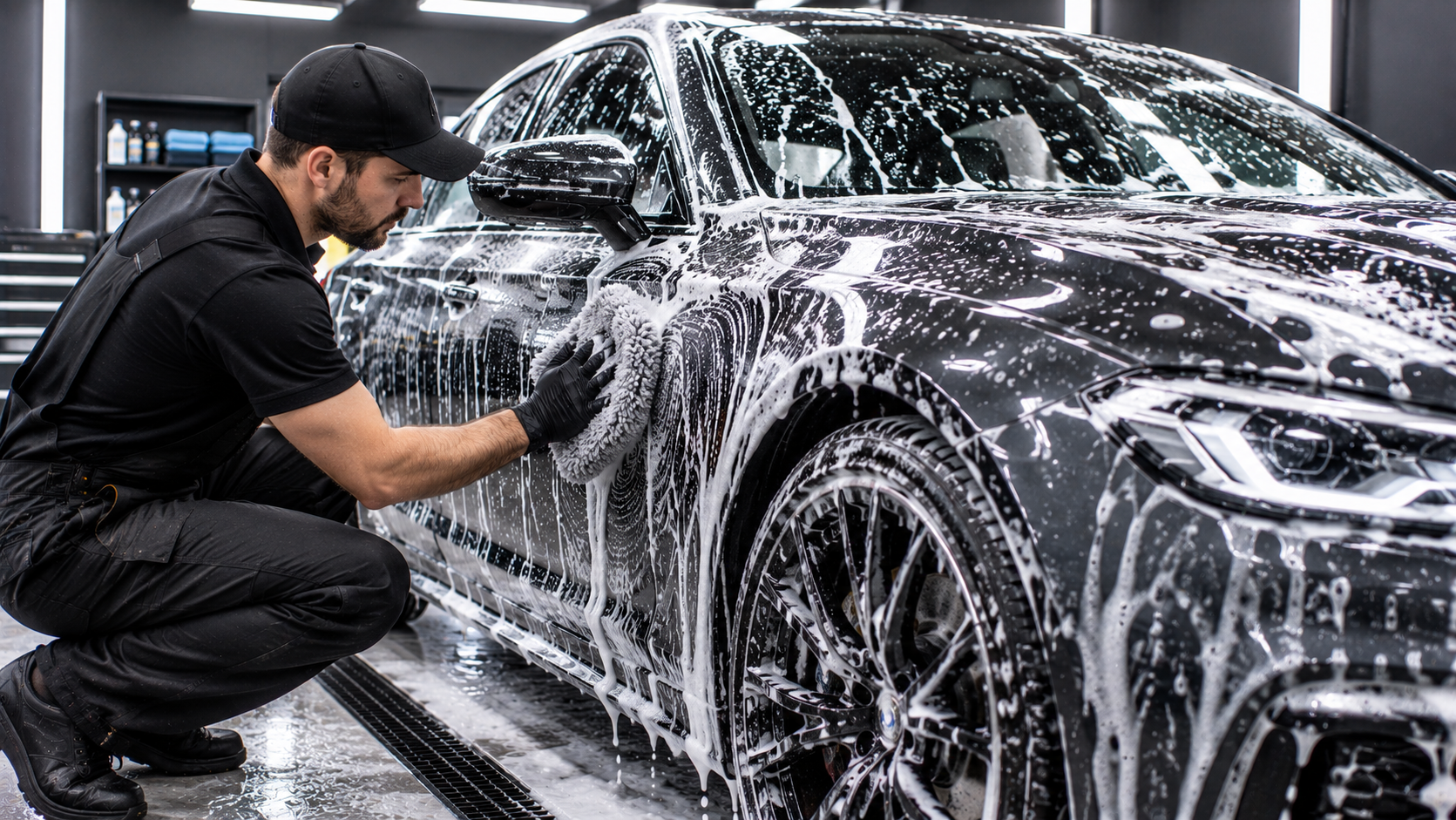
Once the rain has passed and the car is dry, give it a proper wash rather than waiting for the next storm to “rinse it off.” Use a pH-balanced car shampoo, two buckets and clean microfiber mitts. Work from the roof down and save the lower panels and wheels for last so you are not dragging grit across the upper paint.
Dry it properly
Letting a car air-dry after a wash is how fresh water spots form. Use a soft drying towel or a blower, and do not forget door jambs, mirrors and the trunk lip, where water tends to hide and drip later.
Give wheels and lower panels extra attention
Wet brake dust is sticky and can be corrosive to wheel finishes. Use a dedicated wheel brush and a wheel-safe cleaner, and rinse the wheel wells. A quick wipe of the rocker panels and the lower doors makes a bigger visual difference than most people expect.
Add or refresh protection before the wettest weeks
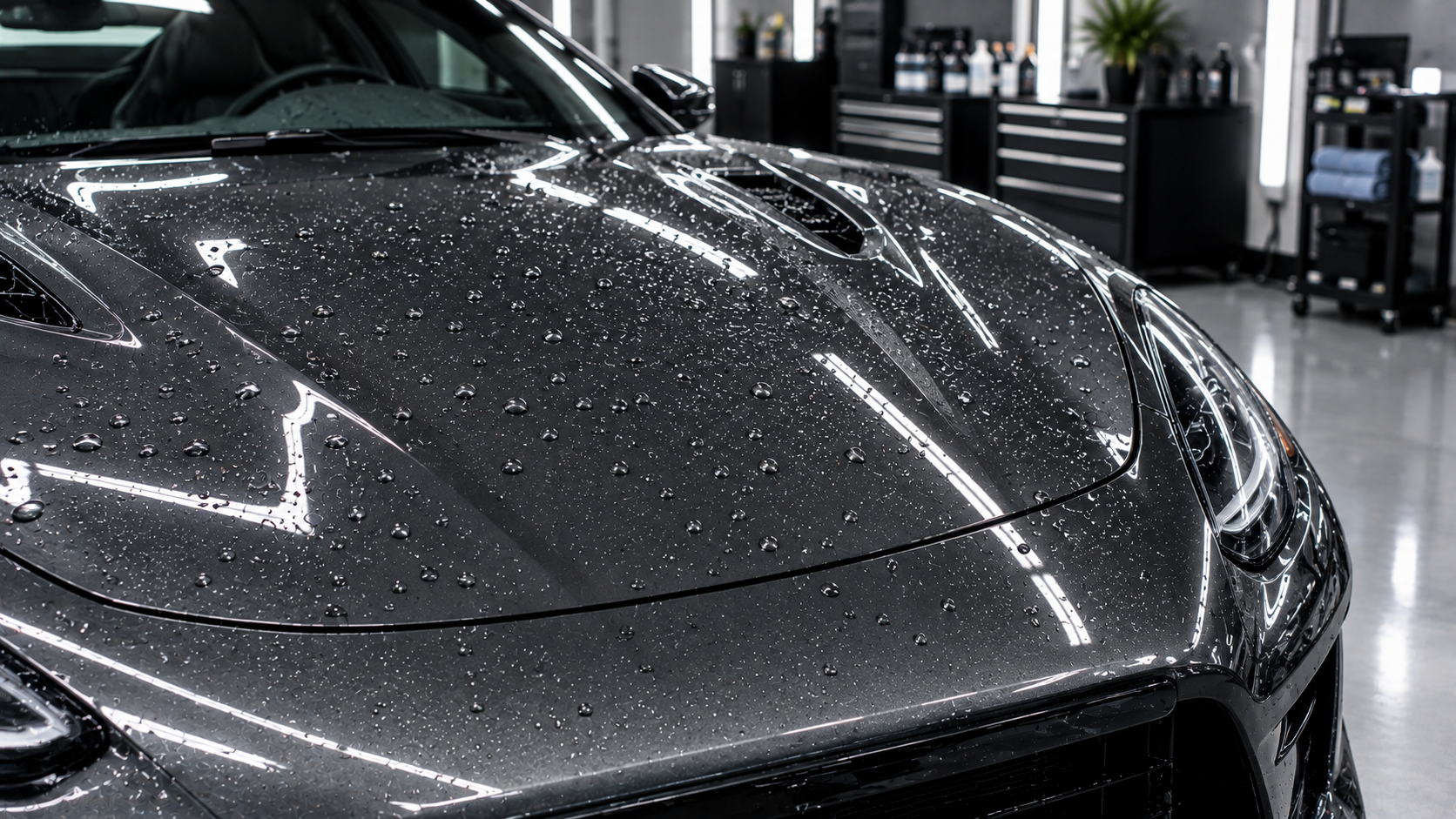
Bare paint holds on to dirt and water. A layer of protection makes the car easier to clean and helps water sheet off instead of sitting on the surface. Waxes and sealants are a short-term option you can renew. For longer-lasting protection, a professional ceramic coating in Santa Clarita helps water and grime release more easily during washes. At Pristine Auto Care, ceramic coatings are applied only at our shop, where we can control the environment while the coating cures.
Glass, wipers and visibility
Rainy season car care is not only about appearance. Clear glass is a safety issue, especially on dark winter evenings.
- Clean the inside of the glass too. A hazy film builds up on interior glass over the summer and causes glare once headlights and wet roads come into play.
- Check your wiper blades. Our long dry season bakes rubber blades. If they streak, chatter or skip on the first rain, replace them.
- Keep the outside glass clean. Road film on the windshield causes smearing that wipers alone cannot clear. A proper glass cleaning before the season helps.
- Top off washer fluid. You will use more of it in the weeks after a storm than you might think.
If you have window tint, clean the inside of tinted windows with a soft microfiber towel and a tint-safe cleaner, and avoid ammonia-based products and abrasive pads.
Keep moisture out of the cabin
Wet shoes, umbrellas and jackets bring water inside, and it does not take long for carpets to start smelling musty.
- Swap in rubber or all-weather floor mats for the season if you have them.
- Pull mats out to dry after very wet days instead of leaving them damp.
- Keep a towel in the car for umbrellas and wet gear.
- Run the defroster with A/C on to help clear interior moisture and fogged glass.
If the carpets or seats already feel damp or smell off, a professional interior car detailing session can deep-clean and dry the cabin far more thoroughly than a shop vac.
Protect the front end from wet-road debris
Wet roads also mean more grit, gravel and debris thrown up by trucks and the car ahead of you. Rock chips on the hood, bumper and mirrors are common on SCV commutes all year, and wet weather does not help. Paint protection film on high-impact areas adds a physical layer between your paint and that debris, and many drivers pair film on the front end with a coating on the rest of the car.
When to call a professional
A home routine handles most of the season, but a professional detail is worth it when:
- The paint feels rough even after a wash, which usually means bonded contamination.
- Water spots are no longer coming off with a normal wash.
- The interior has a lingering damp smell or stained carpets.
- You want protection applied properly before the next storm cycle.
Pristine Auto Care offers mobile auto detailing at your home or office throughout the Santa Clarita Valley. If your paint needs defects addressed, paint correction is quoted separately after we inspect the vehicle. See the areas we serve and contact us to request an estimate.
Frequently asked questions
Does rain wash my car for me?
Not really. Rain loosens some surface dust, but it also deposits new contaminants, and the drops dry into spots. A proper wash and dry after the storm passes is still the best approach.
How soon should I wash my car after it rains?
Within a few days of the car drying off is a good rule. The longer contaminated water spots sit, especially in sunny weather after a storm, the harder they are to remove.
Is it okay to drive a ceramic coated car in the rain?
Yes, once the coating has fully cured. A coating helps water bead and roll off, but the car still needs regular washing during the rainy season. Your installer will give you the cure-time guidance for your vehicle.
Can you detail my car if rain is in the forecast?
Mobile interior and exterior detailing depends on the weather and the workspace at your location. If rain is expected, we will work with you on timing. Ceramic coatings are always applied in our shop.
Should I wax before the rainy season?
Adding protection before the wettest weeks is a good idea. Wax or sealant is a shorter-term option; a professionally installed coating lasts much longer. We can help you decide which fits how you use your car.