



Water spots can appear on a ceramic-coated car even when water still beads on the surface. Start with the coating’s approved wash and drying routine. If marks remain, check the product and coating instructions before trying a mineral remover. Scrubbing harder or choosing a stronger chemical is not a reliable next step.
For Santa Clarita drivers dealing with sprinkler overspray or marks after a wash, the useful questions are: Is the coating fully cured? Which surfaces are affected? And are you looking at a removable deposit or a mark that needs inspection?
Why a ceramic coating can still get water spots
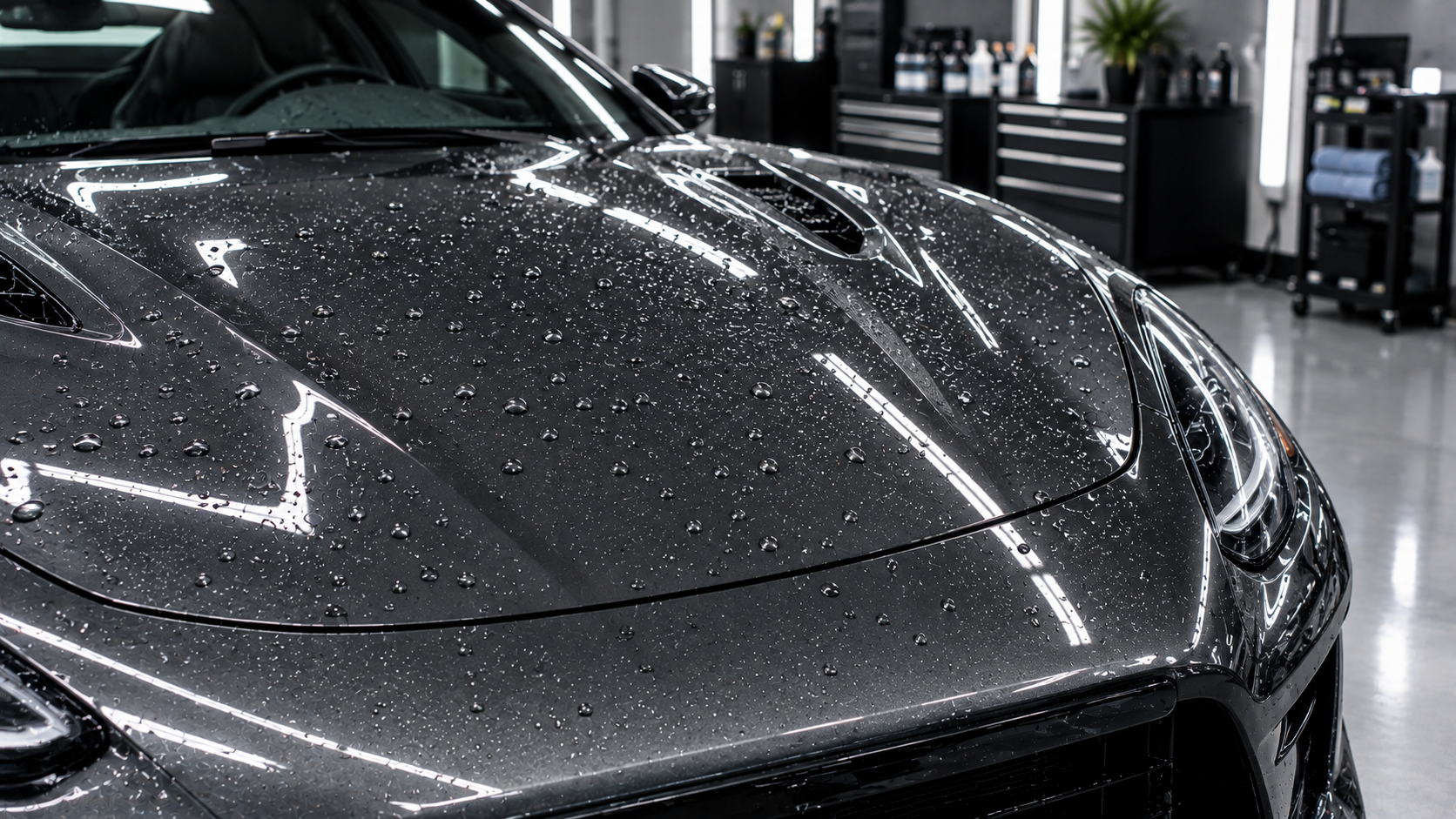
As water evaporates, minerals or other residue can remain on the surface. A coating’s water-repellent behavior does not guarantee that every droplet rolls away before drying. Beading is therefore not proof that spotting cannot happen.
Fresh residue and a persistent mark can look similar in a photo. Do not assume that every ring is permanent paint damage, or that every ring will wash off. Describe what happened and what you have already tried so the next treatment can be chosen more carefully.
Check curing instructions before treating a fresh coating
If the coating was recently installed, contact the installer before washing or applying a remover. Share the installation date and the type of exposure. Follow the care sheet for your exact coating; do not substitute a generic waiting period from another product.
Ceramic Pro’s aftercare guidance distinguishes curing care from ongoing maintenance and cautions against abrasive cleaning and allowing hard water to dry on the finish. Ask the installer how to address new spots during that initial period.
A careful process for an already cured coating
- Identify the surface. Note whether the marks are on coated paint, film, trim or glass. A cleaner approved for one material may not suit another. Check your coating records if you are unsure what was installed.
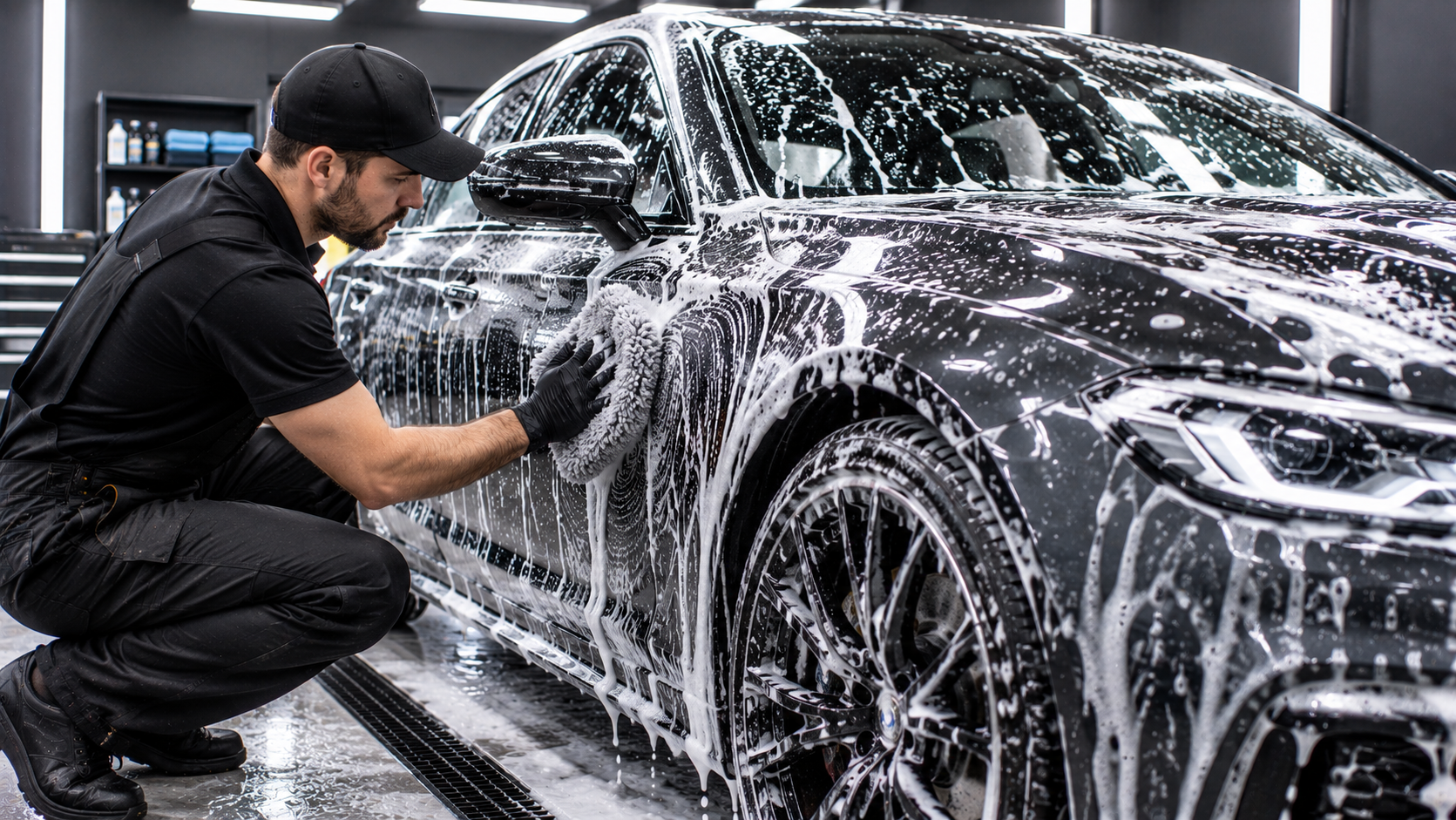
- Start with approved maintenance. Work on cool panels out of direct sunlight. Use the coating manufacturer’s recommended wash method and clean drying towels. Inspect after drying instead of judging through a wet film.
- Confirm compatibility. If a mineral remover is appropriate, follow its current label and the coating maker’s advice. Check application method, dwell time, rinsing instructions and surface exclusions. Test as directed before treating a larger area.
- Stop when the next step is uncertain. If marks remain after the approved process, ask for an assessment. Repeated chemical applications, extra pressure or improvised mixtures may create another problem without resolving the original one.
Why there is no universal remover or dwell time
A description such as “ceramic-safe” is not a compatibility guarantee for every coating, trim piece or window treatment. For example, CARPRO’s Spotless 2.0 instructions distinguish paint, plastic and glass procedures, prohibit use on hot surfaces or in sun, and warn that some window coatings, waxes and sealants may be affected. That is a product-specific example, not a recommendation for your vehicle or a claim that Pristine uses this product.
Do not transfer a dwell time from one bottle to another. Do not treat a household cleaning recipe as interchangeable with your coating’s care instructions. If the coating or surface is unknown, bring that uncertainty to the detailer before choosing a treatment.
When to ask for help with persistent marks
Request an inspection when spotting remains after approved cleaning, when you notice a change in gloss, or when the paint’s repair history is unclear. Ask whether the proposed work is cleaning, polishing or coating replacement, and what result is realistic. Avoid approving abrasive correction just because a spot is still visible.
Useful information to provide includes the coating name and age, affected panels, when the spots appeared, possible sprinkler or wash exposure, and the names of products already used. Take a close-up and a wider photo in ordinary light. An estimate should distinguish the work being proposed from any result that cannot be confirmed before inspection.
Reduce repeat spotting and plan the next step
Keep the car clear of sprinkler spray where practical, plan washes when panels are cool, and remove standing wash water using the approved drying method. Ask before adding a maintenance topper; it does not replace cleaning or guarantee a spot-free finish.
Explore ceramic coating services in Santa Clarita or request an estimate for your vehicle. Include the details above so Pristine Auto Care can discuss the condition of your finish and the appropriate next step.