
Run your fingertips across the hood of a freshly washed car. If the paint feels smooth as glass, great. If it feels gritty or slightly rough, like very fine sandpaper, your car is carrying contamination that a normal wash simply cannot remove. That is exactly what a clay bar treatment is designed to fix.
In this guide we explain what paint decontamination is, why cars in the Santa Clarita Valley pick up so much bonded grime, how a clay bar treatment works, and how it fits with polishing, sealants and ceramic coating. If you are wondering whether a clay bar treatment in Santa Clarita is worth adding to your next detail, this will help you decide.
What “bonded contamination” actually is
Washing removes loose dirt, dust and road film. Some contaminants, however, do not just sit on the surface. They stick to the clear coat and stay there, even after a careful hand wash. Common examples include:
- Industrial and rail fallout. Tiny metal particles from brakes, rail lines and industrial activity land on the paint and embed in the clear coat. On white and light-colored cars they often show up as small orange or brown specks.
- Tree sap and overspray. Sap mist from trees and paint overspray from nearby work can leave a hazy, sticky film.
- Road tar. Freeway driving on the 5 and the 14 throws tar and asphalt specks onto lower panels and behind the wheels.
- Mineral deposits. Sprinkler water and hard water can leave mineral residue that bonds as it dries.
- Ash and dust. Fire season and windy days leave fine particles that settle into the finish and get baked on by the sun.
Because these particles are bonded, they make the paint feel rough, dull its gloss and give wax, sealants and coatings a poor surface to bond to.
How a clay bar treatment works
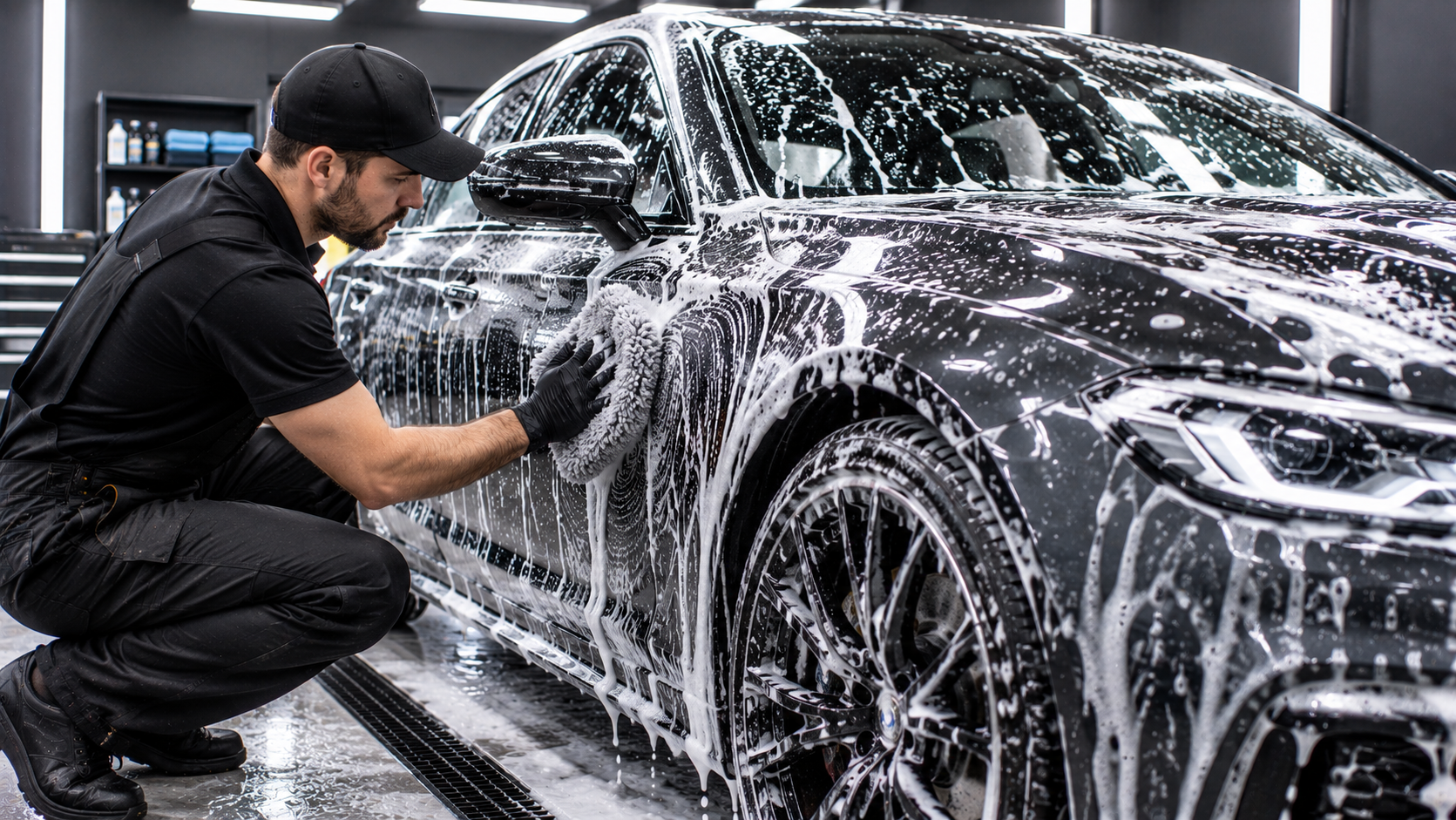
A detailing clay bar is a soft, pliable compound. After the car is washed, the surface is sprayed with a clay lubricant and the clay is glided gently across each panel. Contaminants that stick up above the clear coat are grabbed by the clay and lifted away, while the lubricant helps the clay slide instead of drag. The clay is folded often so a clean face keeps working on the paint.
Many professional detailers also use a chemical step before claying, such as an iron remover that dissolves embedded metal particles, and a tar remover for heavy spots on lower panels. Combining chemical and mechanical decontamination lets the clay do less work, which is gentler on the paint.
The result is a surface that feels smooth and clean, ready for polish or protection.
How to tell if your car needs decontamination
You do not need special tools to check. Try these simple tests:
- The touch test. Wash and dry a small area, then lightly run your fingertips across it. Roughness or “grabbing” means bonded contamination.
- The plastic bag test. Put your hand inside a thin sandwich bag and glide it over the paint. The bag exaggerates every bump, so contamination is easy to feel.
- Visual clues. Look for tiny rust-colored dots, a dull or hazy look that does not wash off, or wax that no longer beads water the way it used to.
If you notice any of these, a clay bar treatment is usually the right next step.
Clay bar vs. polishing vs. paint correction
These three services are often confused, but they solve different problems:
- Clay bar treatment removes contaminants that sit on top of the paint. It does not remove scratches, swirl marks or etching.
- Polishing uses a machine and a fine abrasive to refine the surface and restore gloss. It removes a very thin layer of clear coat to reduce light swirls and haze.
- Paint correction is a more involved, multi-step polishing process aimed at removing as many visible defects as practical. It is quoted separately because the time needed depends on the paint’s condition.
Claying almost always comes before any polishing. If you polish over contamination, the pad can drag those particles across the paint and cause new marring. To learn more about the polishing side, read our guide on paint correction before ceramic coating.
Why decontamination matters before protection
Wax, paint sealants and ceramic coatings all need a clean, bare surface to bond to. Applying protection over bonded contamination is like painting a wall without cleaning it first: the product sits on the grime instead of the paint, and it will not last as long or look as good.
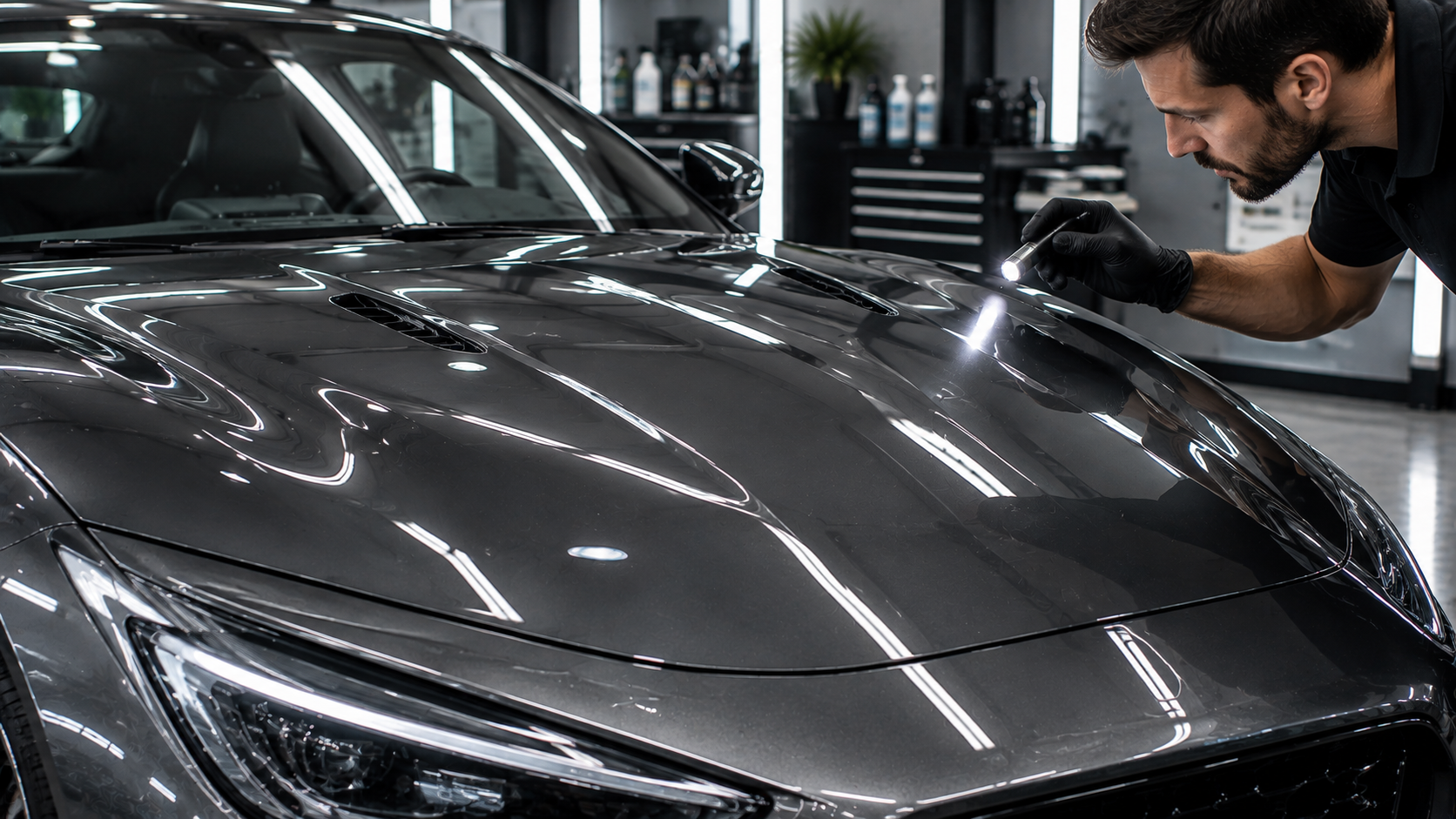
That is why decontamination is a standard part of preparing a car for ceramic coating in Santa Clarita. Ceramic coating at Pristine Auto Care is applied only at our shop, where the paint can be properly washed, decontaminated, inspected under lighting and coated in a controlled environment. The same clean surface also matters before paint protection film is installed, since film needs to sit flat against clean paint.
How often should you clay your car?
There is no single schedule that fits every car. As a general guide:
- Daily drivers parked outside in the Santa Clarita Valley often benefit from decontamination once or twice a year.
- Garaged cars that see less fallout may only need it once a year or less.
- Before applying any new wax, sealant or coating, decontamination is a good idea regardless of the calendar.
Clay is gentle, but every pass involves contact with the paint, so clay when the touch test says it is needed rather than on a fixed routine.
Can you clay your car yourself?
You can. Consumer clay kits are widely available. If you try it at home, keep these tips in mind:
- Always work on a cool, freshly washed car out of direct sun.
- Use plenty of lubricant. Never rub dry clay on paint.
- Work in small sections with light pressure and straight-line passes.
- If you drop the clay on the ground, throw it away. It will pick up grit that can scratch.
- Follow up with protection, because claying can also remove existing wax.
Many owners prefer to leave it to a professional, especially on dark paint, which shows marring easily, or when they plan to follow up with polishing or coating. Clay bar treatments are part of our auto detailing services, and we can recommend whether polishing or protection makes sense once we see the paint in person.
Frequently asked questions
Will a clay bar remove scratches or swirl marks?
No. A clay bar removes contaminants on top of the paint. Scratches and swirls are defects in the clear coat itself and need polishing or paint correction, which is quoted separately.
Is a clay bar treatment safe for my paint?
When done correctly with enough lubricant and light pressure, yes. Problems usually come from claying a dirty or dry surface, or from reusing clay that has picked up grit.
Can I clay a car that already has a ceramic coating?
Usually it is not needed, because a well-maintained coating resists bonded contamination. If a coated car feels rough, ask your installer first. A gentle chemical decontamination is often the preferred approach for coated paint.
Do you offer clay bar treatments outside Santa Clarita?
We serve Santa Clarita and nearby communities. See our areas we serve page for the full list.
Ready for smoother, cleaner paint?
If your car feels rough after a wash, or you are planning a sealant, ceramic coating or paint protection film, start with proper decontamination. A clay bar treatment is one of the simplest ways to restore that smooth, glossy feel and give any protection the best possible surface. For winter-specific care, see our rainy season car care guide, and when you are ready, contact Pristine Auto Care to talk about your car.