


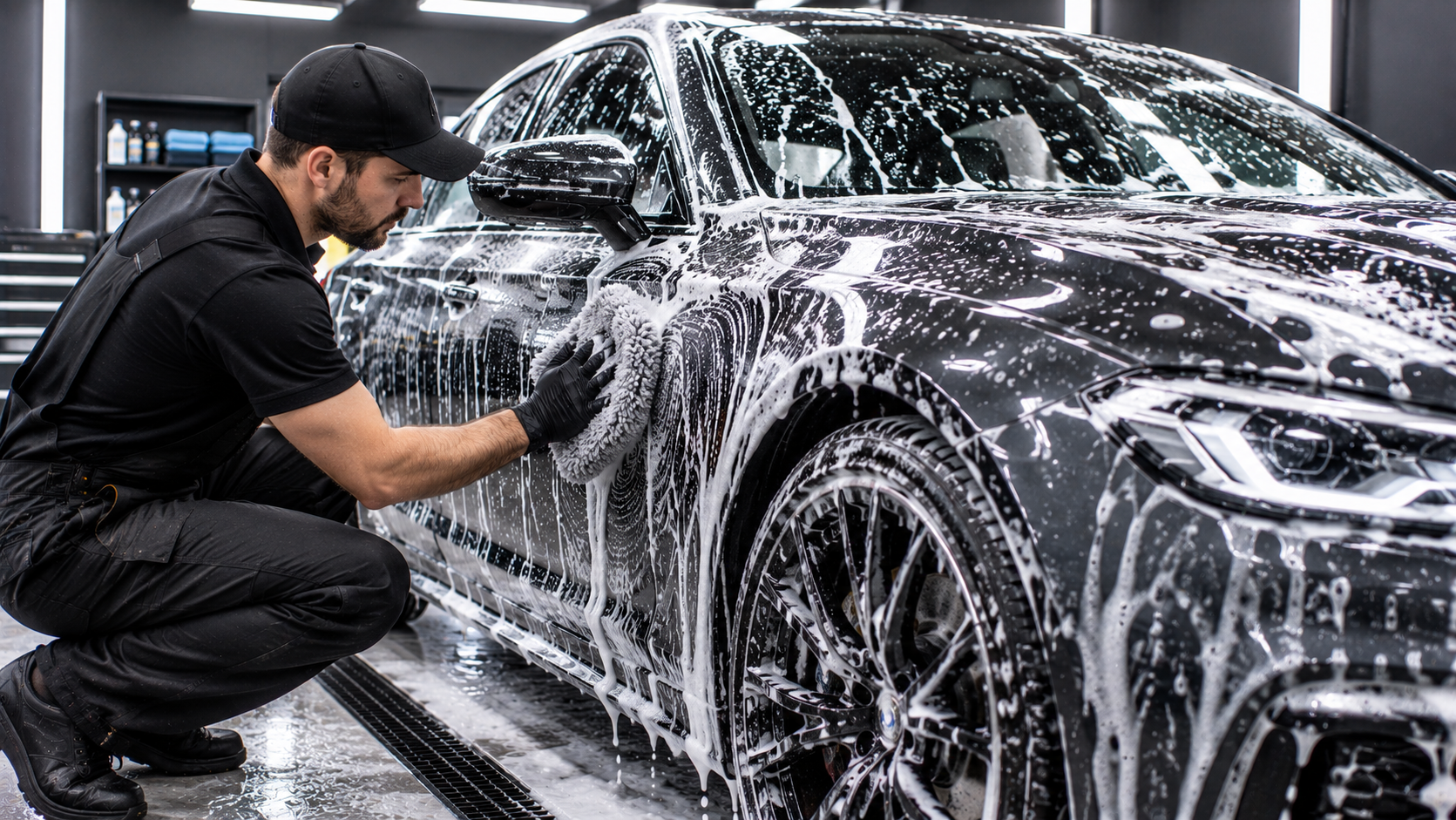

Wash a ceramic-coated car only after its installer has cleared it for shampoo washing. For ongoing care, use compatible products, clean tools and a method that keeps dirt out of contact with the paint. A coating does not make an abrasive wash harmless.
This guide covers a maintenance hand wash for Santa Clarita owners. For a newly coated vehicle, start with our ceramic coating curing stages and first-wash instructions. Permission to drive home is not necessarily permission to wash.
Before you start: check the surface and your supplies
Choose a place where the panels are cool and you can finish rinsing and drying before products dry on the vehicle. On a warm Santa Clarita afternoon, moving into shade may not immediately cool paint that has been sitting in the sun. Check the surface first.
- Coating instructions: identify the installed product and any separate requirements for coated wheels, glass, trim or paint protection film.
- Compatible shampoo: follow the coating maker’s recommendation and the shampoo label for dilution. Do not assume that every bottle labelled “ceramic” is suitable.
- Clean wash tools: prepare soft wash mitts, clean rinse water and separate wheel-cleaning tools. Set aside anything dropped on the ground until it has been properly cleaned.
- Drying equipment: have clean, dedicated microfiber drying towels ready before wetting the vehicle. If using an air dryer, follow its instructions and avoid blowing debris back onto clean panels.
Step-by-step maintenance wash
1. Keep wheel dirt separate
Use products appropriate for the wheel finish and any installed coating. Clean with dedicated tools and rinse as directed. Do not transfer a wheel brush or dirty wheel water to the body paint. If wheel-cleaner compatibility is unclear, check before applying it.
2. Rinse loose contamination before contact washing
Rinse away loose dirt before moving a mitt across the body. Use a hose or pressure washer only as permitted by the coating, vehicle and equipment instructions. Pressure, nozzle pattern and working distance matter; a single distance is not a safe rule for every setup or film edge.
If you use a pre-wash foam, follow that product’s dilution and dwell instructions. Do not leave it for a fixed number of minutes regardless of conditions, and do not allow it to dry. Foam is an optional step, not proof that the surface is clean.
3. Wash manageable sections with clean tools
Work from the upper panels toward dirtier lower areas with light pressure. With a two-bucket method, rinse the mitt in clean rinse water before loading fresh shampoo. Replace dirty water and change tools when needed. A grit guard does not make contaminated water or a gritty mitt safe.
If a mark stays in place, do not keep scrubbing harder. Stop and identify whether it needs a different approved treatment or an inspection.
4. Rinse before shampoo dries
Rinse each area thoroughly according to the shampoo directions. Work in smaller sections if the surface or weather makes it difficult to keep the solution wet. Avoid leaving residue around trim and panel joins.
5. Dry, then inspect
Remove standing water with clean drying tools rather than leaving the car to air-dry. Check mirrors, trim and other areas that may drip afterward. If you find spots or streaks, check the product instructions before adding cleaners or another coating product.
What if water stops beading as strongly?
Reduced beading alone does not tell you whether a coating has failed. Ceramic Pro’s official aftercare guidance explains that contamination can reduce hydrophobic behavior. It also advises avoiding warm surfaces and dry wiping, and removing standing water. Those examples do not replace the instructions for your installed product.
Record what changed, the products used and whether the concern remains after a suitable wash. Our ceramic coating care plan helps organize those details before you ask an installer about cleaning, inspection or additional treatments.
How often should you wash?
Use the manufacturer’s schedule as your starting point and account for how the car is used and stored. Ask how to address fresh contamination between washes. A calendar reminder should not mean ignoring a problem until the next scheduled wash, or applying stronger chemicals automatically.
Discuss ceramic coating care in Santa Clarita
Explore ceramic coating services in Santa Clarita or request a coating estimate. Include the vehicle, its paint condition and any known existing coating so you can discuss suitable preparation and aftercare before choosing a service.