


No, you should not polish a ceramic-coated car if you want to keep the coating intact. Car polishes contain micro-abrasives designed to level a microscopic layer of clear coat. Because a ceramic coating cures into an ultra-thin protective barrier over your paint, machine or hand polishing will abrade and strip the ceramic layer away.
Understanding when polishing is appropriate—and what to do instead to maintain your vehicle’s shine—helps preserve your investment in long-term paint protection.
Why Polishing Removes Ceramic Coating
Ceramic coatings form a chemical cross-link with your factory clear coat, adding a hard, hydrophobic shield that measures only 1 to 3 microns thick.
Polishing compounds work through mechanical friction. When an abrasive pad and polish rotate against body panels, they remove surface material to erase swirl marks and scratches. Because the ceramic coating rests on the outermost surface of the clear coat, any abrasive polishing action cuts directly through that protective shell.
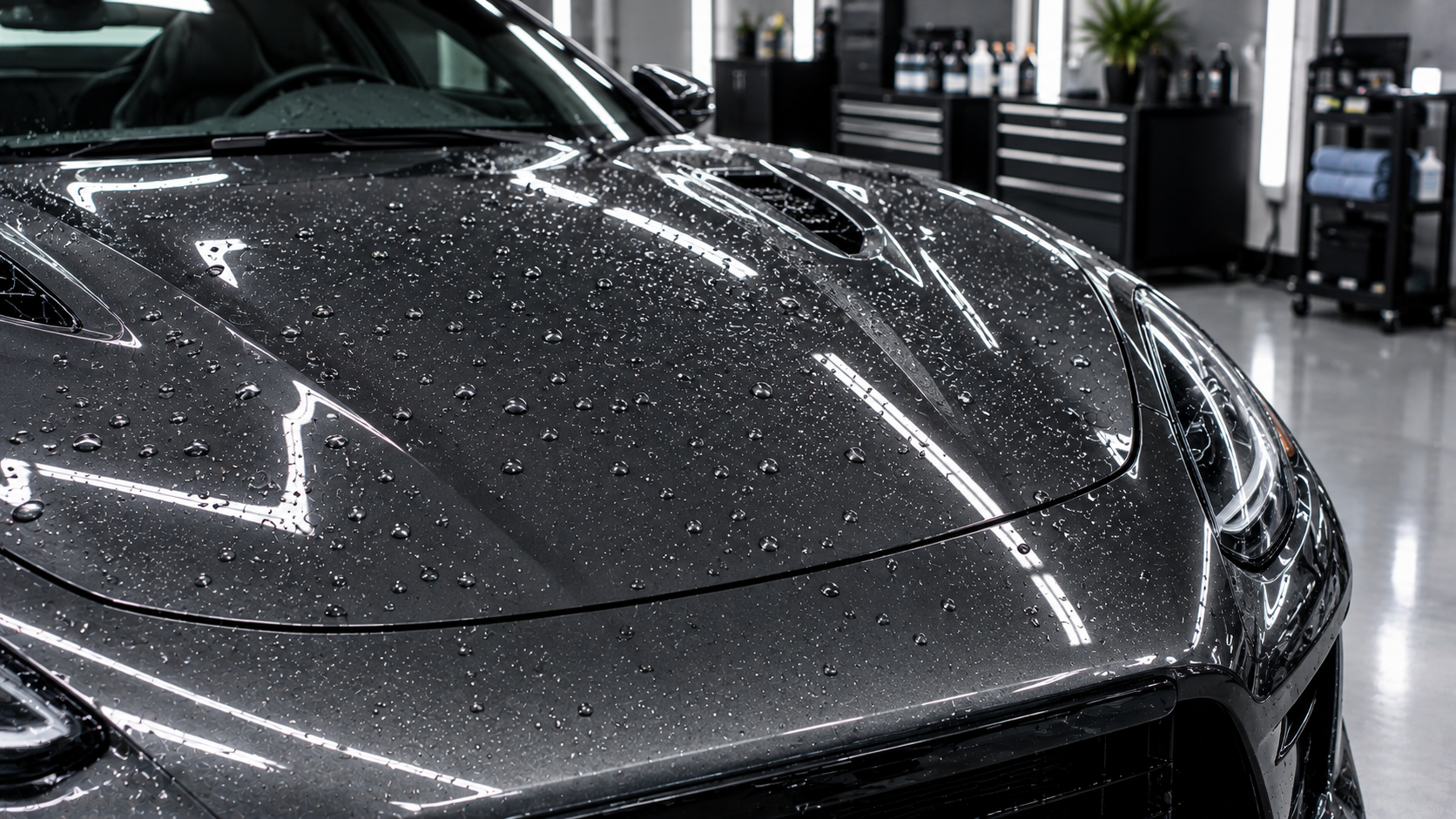
If you polish a coated car, the hydrophobic water-beading performance, UV protection, and chemical resistance will be severely degraded or removed entirely on those panels.
What to Do If Your Ceramic Coating Loses Gloss
If your coated vehicle begins looking dull or loses its water-repellent slickness, the issue is rarely a failed coating. In most cases, environmental road film, iron fallout, and mineral deposits have simply accumulated on top of the surface, clogging the coating’s microscopic structure.
Instead of reaching for a polisher, restore your finish using safe decontamination methods:
-
Perform a Decontamination Hand Wash: Wash the vehicle thoroughly with a pH-neutral shampoo to remove loose road film and grime.
-
Use a Chemical Iron Remover: Spray a dedicated iron fallout remover onto the paint to dissolve embedded brake dust particles without abrasive friction.
-
Apply a Silica Ceramic Booster: Spray a ceramic maintenance topper onto clean panels and wipe dry with a plush microfiber towel. This revitalizes the top hydrophobic layer and restores deep gloss instantly.
How to Handle Scratches on a Coated Car
If your vehicle suffers a light scratch after being coated, you have two main options:
-
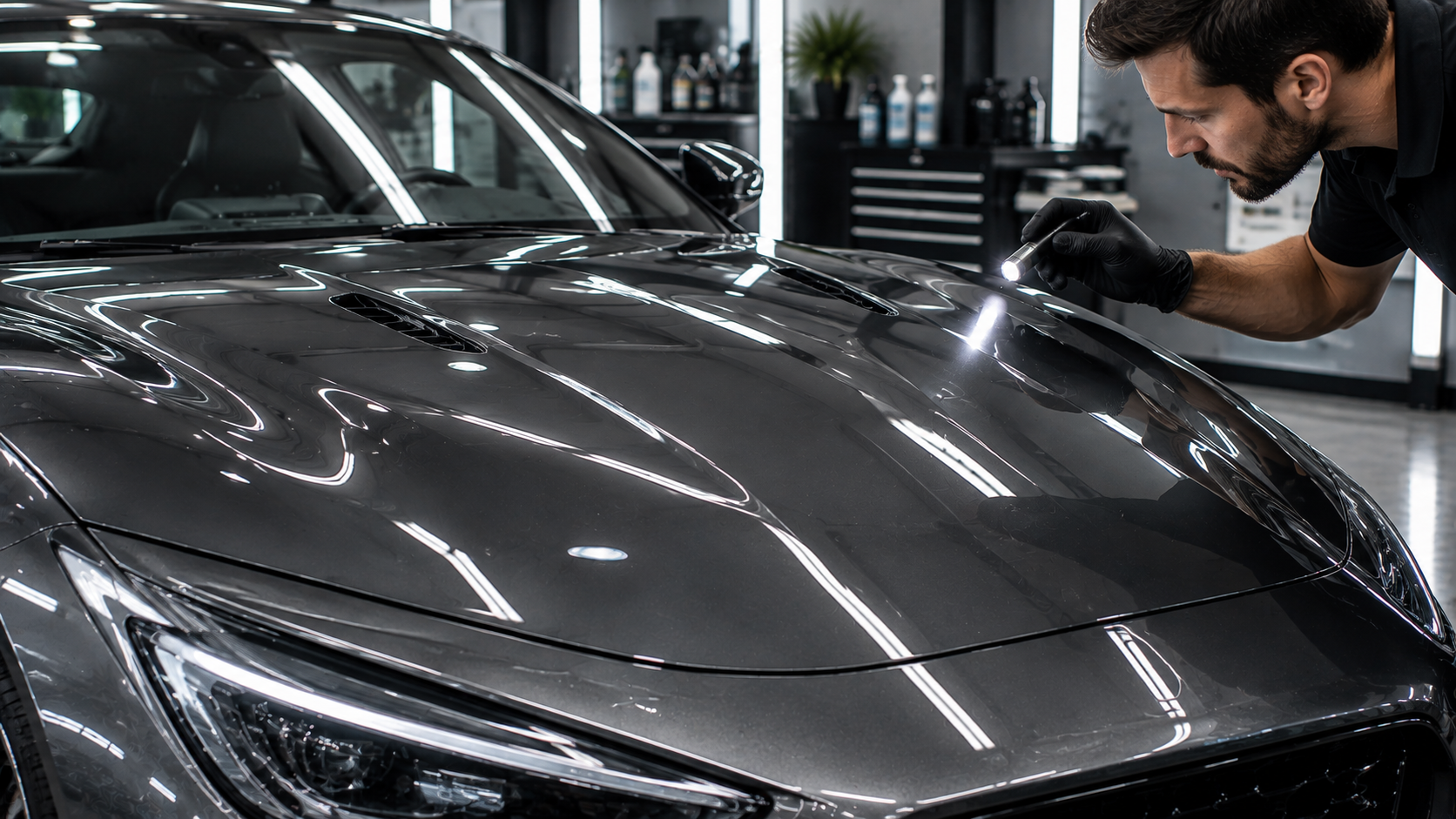
Leave Minor Scratches Intact: If the mark is faint and only visible under direct inspection light, it is often best to leave it alone to preserve the surrounding ceramic barrier.
-
Spot Polish and Re-Coat: If the scratch is noticeable, the affected panel can be lightly polished using professional Paint Correction tools to remove the scratch. However, because polishing strips the coating in that area, a fresh layer of professional ceramic coating must be reapplied to that specific panel afterward.
Proper Coating Upkeep in Santa Clarita
Driving in the Santa Clarita Valley exposes vehicles to intense afternoon heat, blowing dust, and high UV radiation. Maintaining a smooth, glossy surface requires regular maintenance rather than heavy polishing.
Washing your car every two weeks using safe hand-washing techniques prevents contaminants from baking onto the surface under the California sun.
Frequently Asked Questions
Does polish completely strip ceramic coating?
Yes. Even mild finishing polishes contain fine abrasives that will remove or severely thin out an ultra-thin ceramic coating layer. Machine polishing is actually the primary method detailers use to intentionally remove an old ceramic coating before applying a new one.
Can I apply wax over a ceramic coating instead of polishing?
Applying traditional car wax over a ceramic coating is not recommended. Wax creates a soft layer on top of the coating that masks its natural hydrophobic water-beading properties and tends to attract dust.
Looking for Ceramic Coating Maintenance in Santa Clarita?
Pristine Auto Care provides professional detailing, decontamination washes, and ceramic coating services to keep your vehicle’s finish protected and glossy.