



There is no single detailing interval that suits every RV in Santa Clarita. Start with the care schedule for your particular vehicle, then adjust cleaning to its condition, trip use and storage. An RV parked outside between frequent trips needs a different plan from one kept under cover and used occasionally.
Routine washing, a deeper detail, polishing and repairs are different jobs. Before booking, decide which problem you want addressed and ask what the proposed service includes. Our RV detailing service page is a starting point for discussing your vehicle and the work you need.
Start with your RV’s materials and care instructions
Identify the year, make and model, and check the manufacturer’s instructions for the exterior finish, graphics, roof and interior materials. Do not assume a cleaner or treatment suitable for one surface is suitable for the entire RV. Share any existing coating, previous repainting or repairs with the detailer.
For example, Winnebago provides operator manuals by model year. Owners of other brands should use their own manufacturer’s documentation. Keep any separate instructions for installed products with the vehicle records. A general detailing article should not replace a model-specific cleaning or inspection schedule.
Use condition and trip milestones to plan cleaning
Instead of automatically booking the same treatment every few months, use these checkpoints alongside the manufacturer’s schedule:
- After a trip: look for accumulated road dirt, insect residue, spills and tracked-in debris. Identify what needs prompt attention using the appropriate care instructions rather than leaving everything until the next deep clean.
- Before storage: assess the interior and exterior, remove personal items from areas being cleaned and agree on drying requirements. Confirm that cleaning fits the storage plan; it does not replace winterization or other maintenance.
- After storage: check the visible surfaces before deciding on a wash or a more involved detail. Report water marks, damaged trim, peeling graphics or persistent odors so the provider can explain the limits of cleaning.
- Between trips: review how quickly dirt returns in your actual parking environment. Outdoor exposure, nearby trees and frequency of use can change the work needed, even when two RVs were last detailed on the same date.
Keep a short record of the date, work completed, products used and concerns noticed. That makes the next estimate more useful than simply asking for “the usual detail.” It also helps distinguish routine upkeep from a problem that keeps returning.
Know when detailing is not the next step
Cleaning cannot repair a leak, failing seal, damaged graphics or deteriorating material. If you see signs of damage or moisture intrusion, arrange an appropriate assessment rather than assuming polishing or a stronger cleaner will solve it. A detail is not a mechanical, roof or safety inspection.
Likewise, a dull exterior does not automatically need aggressive polishing. Ask the provider to identify the surface, assess its condition and explain what improvement is realistic. Confirm any additional work and price before it begins. Do not assume every detail includes roof work, oxidation removal, interior cleaning or a protective treatment.
What to confirm for mobile RV detailing
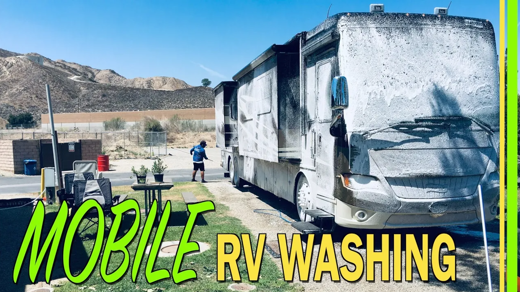
If you want service at a home or storage facility, first confirm that the provider can perform the requested work at that location. Give the RV’s dimensions and describe access, parking and any site rules. Obtain permission from the property or storage operator where needed.
Ask about working space, water and power requirements, runoff arrangements and what happens if weather makes the work unsuitable. Discuss access to the areas being cleaned and who will move the vehicle. Roof access and elevated work need their own assessment; do not climb onto the RV just to prepare for a quote.
Build a useful RV-detailing request
Send the year, make, model, approximate size, storage arrangement and your main concerns when you request an RV detailing estimate. Clear photos taken from a safe position can help explain stains, surface marks or areas needing assessment.
Ask for a written scope identifying included areas, exclusions, preparation, expected results and any drying or aftercare instructions. A practical maintenance plan should fit your RV and how you use it, without promising that cleaning will make every surface look new or guarantee a higher resale value.