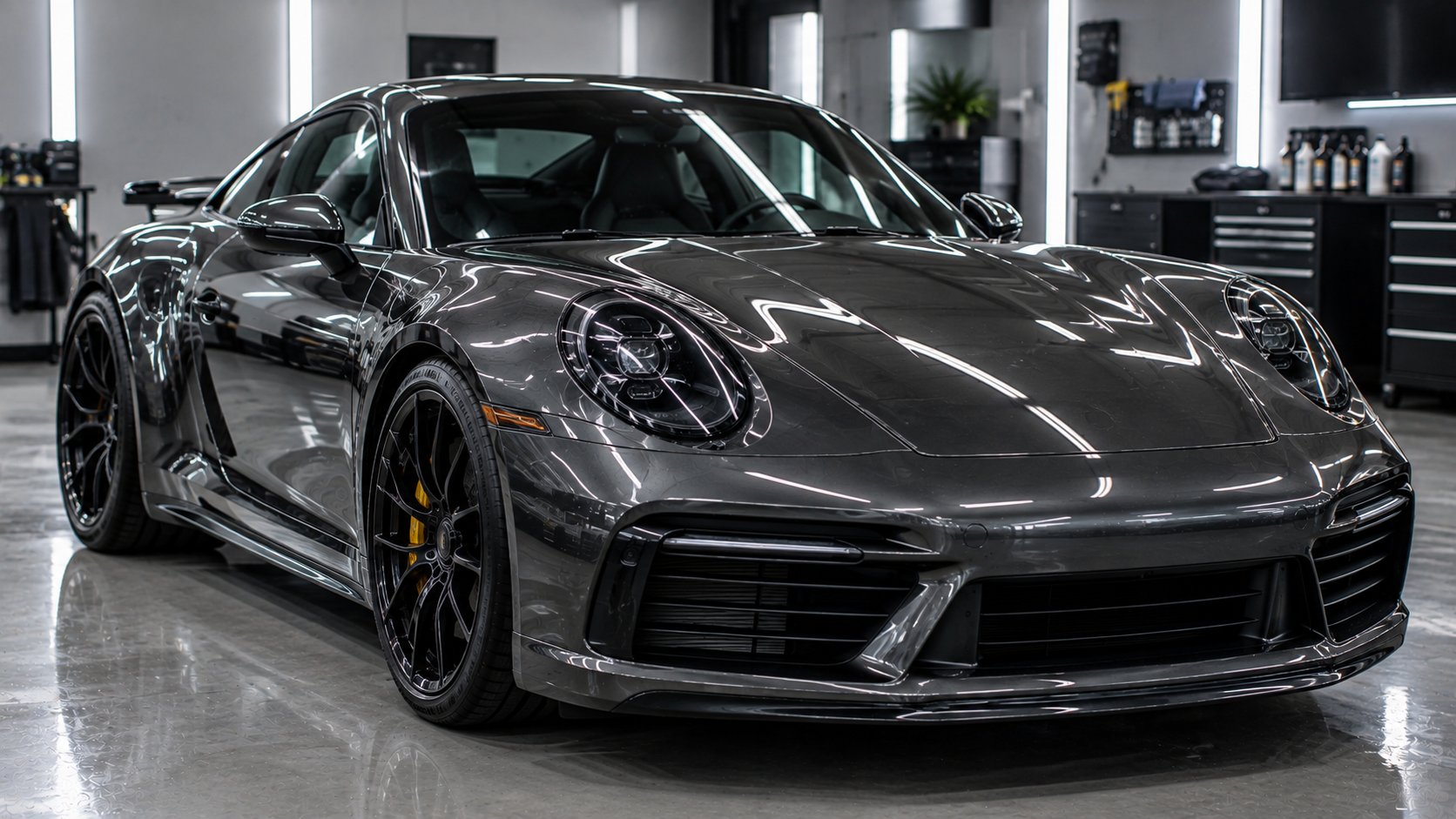
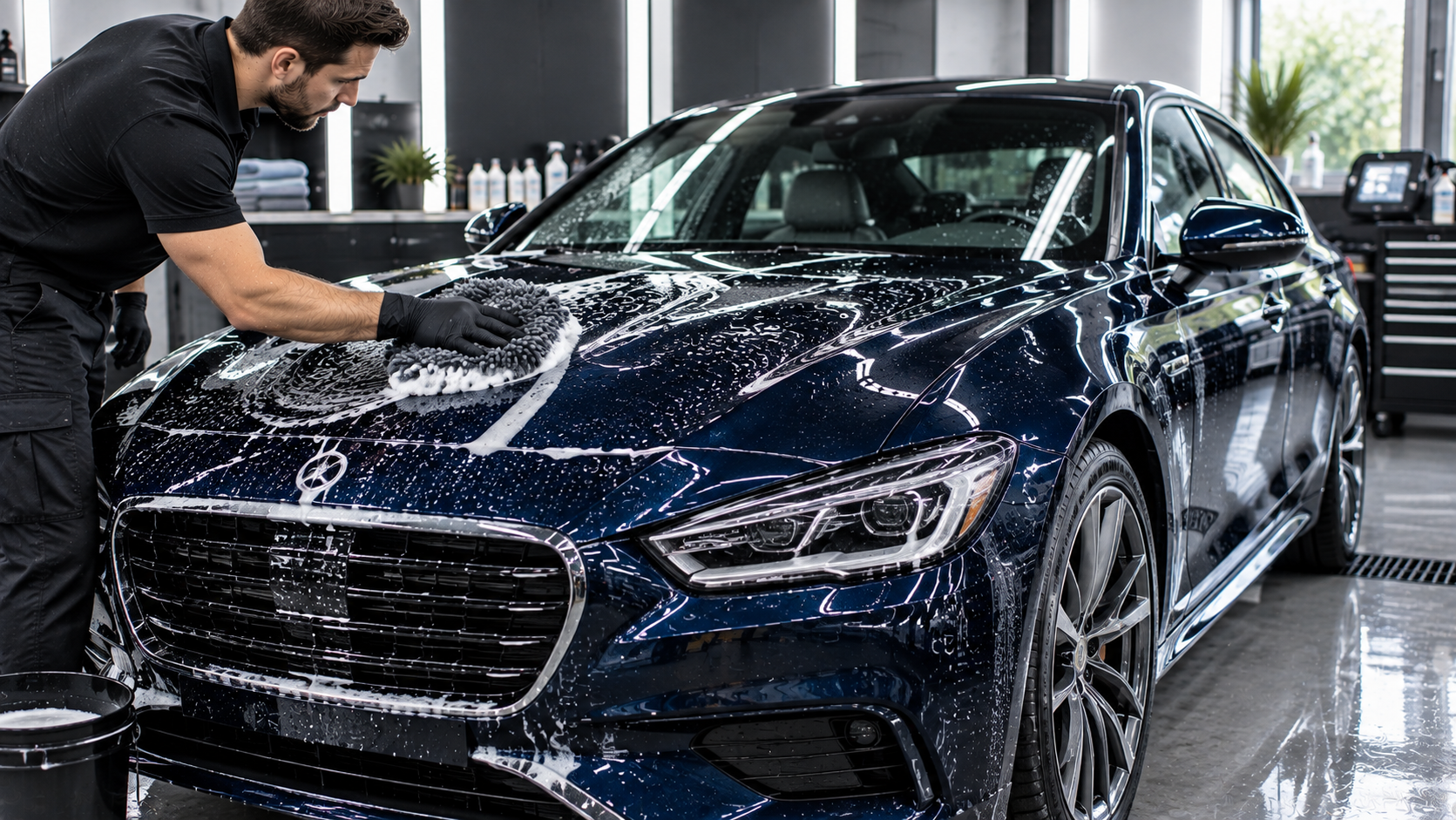
A ceramic coating is a liquid polymer formula containing silicon dioxide ($SiO_2$) that chemically bonds with your vehicle’s factory clear coat. Once applied and cured, it hardens into a durable, hydrophobic protective layer over your paint. Unlike traditional car wax that sits loosely on top of the panels, a ceramic coating forms a semi-permanent barrier that repels water, resists environmental contaminants, and shields your exterior from UV damage.
Understanding how ceramic coatings work helps vehicle owners make informed decisions about protecting their automotive investment.
What Ceramic Coating Is (And What It Isn’t)
Because ceramic coatings have become so popular in the detailing industry, several common misconceptions exist regarding what the product can actually accomplish.
What It Is:
-
A Semi-Permanent Bond: Liquid nanoceramic molecules cross-link with polyurethane clear coat pores, creating a seamless, glass-like top layer.
-
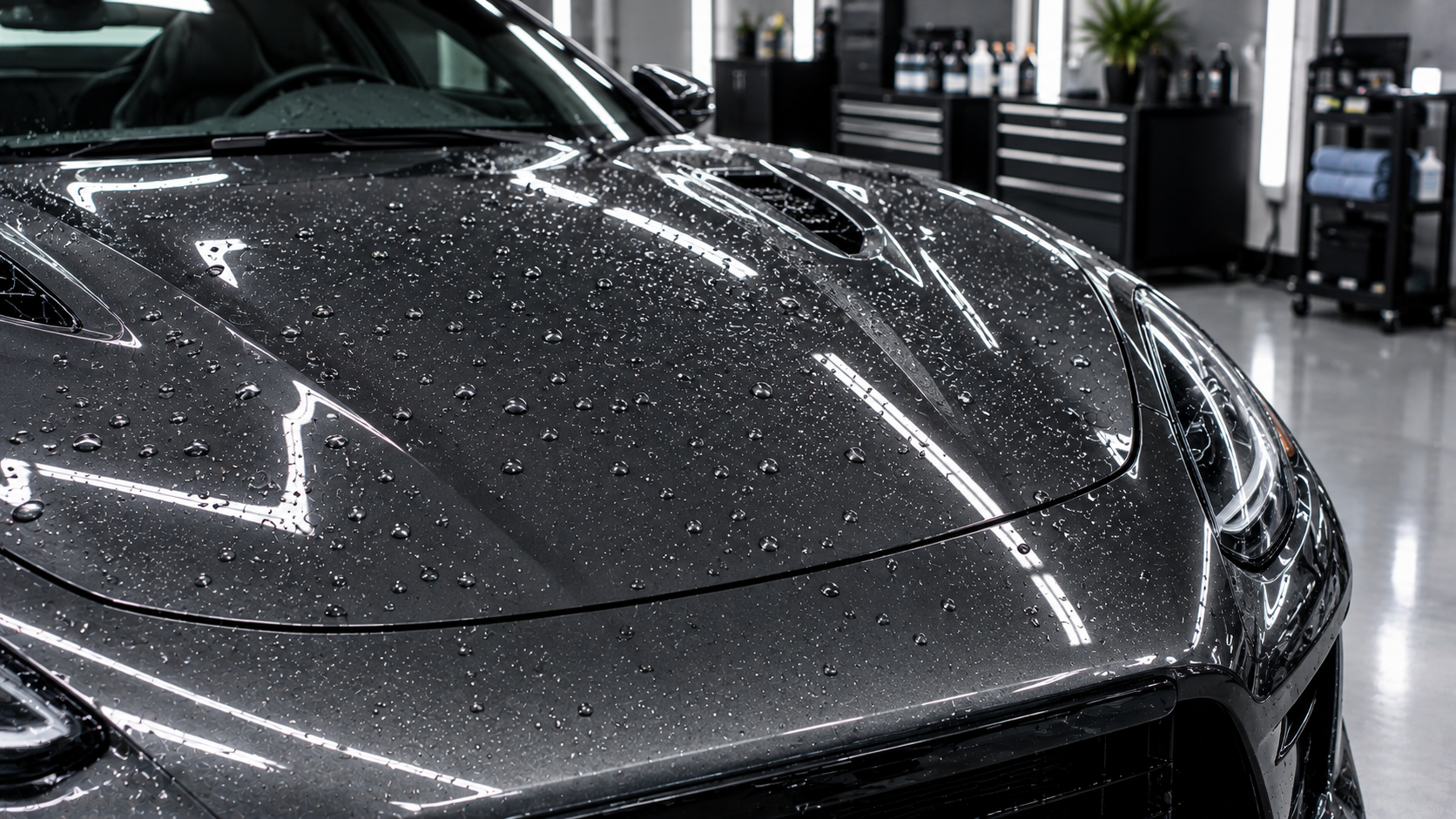
A Hydrophobic Barrier: The low surface tension forces liquids to form tight droplets that roll off easily, carrying loose surface dust along with them.
-
A UV and Chemical Shield: The inorganic structure resists breakdown from intense solar radiation, acidic bird droppings, and mineral-heavy water.
What It Isn’t:
-
Not Scratch-Proof or Chip-Proof: Liquid coatings are extremely thin (1 to 3 microns) and cannot absorb high-speed gravel impacts. For physical rock chip defense, pairing a coating with Paint Protection Film is required.
-
Not Maintenance-Free: Coated vehicles still accumulate airborne road film and dust, requiring periodic hand washing to maintain hydrophobic performance.
The Key Benefits of Vehicle Paint Protection
Applying a professional ceramic coating offers several long-term advantages over basic wax or spray sealants:
-
Long-Lasting UV Defense: Solar radiation breaks down factory clear coats, causing dark colors to fade and oxidize. Ceramic coatings absorb UV rays and resist high temperatures without melting away.
-
Self-Cleaning Hydrophobic Properties: The ultra-smooth surface makes it difficult for road grime, pollen, and tree sap to adhere tightly to the body panels.
-
Deep Optical Clarity: The coating fills microscopic clear coat surface imperfections, resulting in a deeper mirror reflection and rich color depth.
-
Easier Maintenance Washes: Dirt slides off effortlessly during routine washing, drastically shortening the time needed to clean your car.
[INLINE IMAGE PROMPT: Macro photograph of water droplets forming uniform spherical beads on a dark blue ceramic-coated vehicle hood under soft shop lighting. 16:9 aspect ratio, photorealistic, sharp focus, no text, no logos. ALT TEXT: Close-up macro photograph of hydrophobic water beading on a dark blue coated car hood.]
How Ceramic Coating Compares to Traditional Car Wax
Traditional carnauba wax is an organic substance that rests on top of your paint. Because it has a low melting point, summer heat and routine car washes dissolve wax within 4 to 8 weeks.
In contrast, a ceramic coating utilizes inorganic silicon dioxide ($SiO_2$). It withstands high heat, resists detergent soaps, and stays bonded to the clear coat for multiple years rather than a few weeks.
Why Ceramic Protection Matters in Santa Clarita
Driving in the Santa Clarita Valley subjects vehicle finishes to intense sun exposure, dry summer wind, and airborne dust along the I-5 and Route 14 freeways. Unprotected paint exposed to long parking hours in Valencia or Saugus oxidizes and loses clarity rapidly.
Applying a ceramic coating provides the necessary UV barrier to preserve your factory paint and simplify weekly cleaning routines. Combining professional installation with proper Auto Detailing maintenance ensures your coating performs like new year after year.
Frequently Asked Questions
How long does a ceramic coating last?
A professional ceramic coating typically lasts between 2 and 5 years depending on the formula, surface preparation, and ongoing hand-washing habits.
Can I wash my car normally after getting a ceramic coating?
Yes, but you should wait 7 days after application for full chemical curing. After the cure period, hand-wash the car every two weeks using a pH-neutral car soap and soft microfiber wash mitts.
Looking for Ceramic Coating in Santa Clarita?
Pristine Auto Care provides professional ceramic coating services designed to protect your vehicle’s paint against California sun and daily environmental wear.