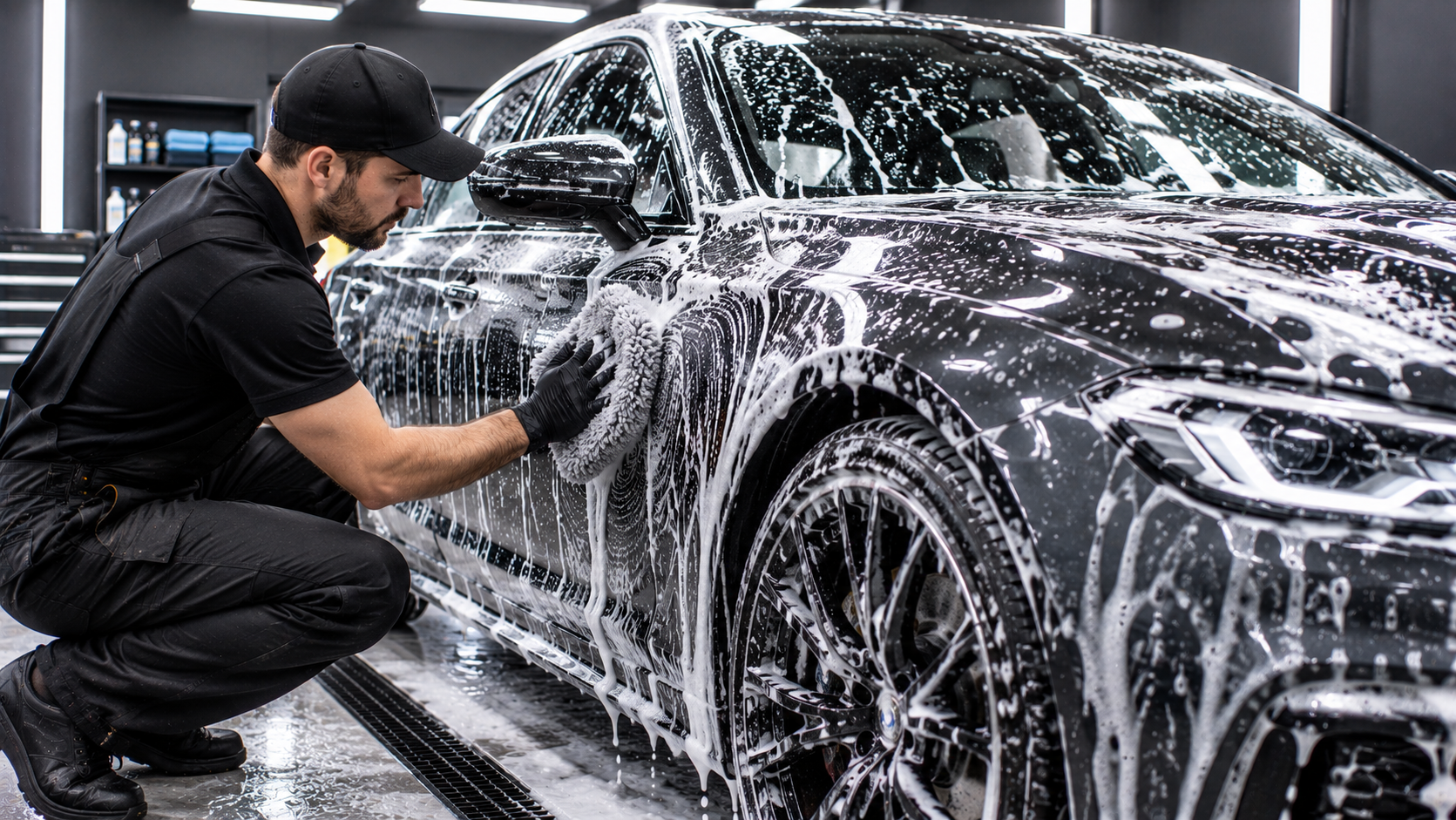
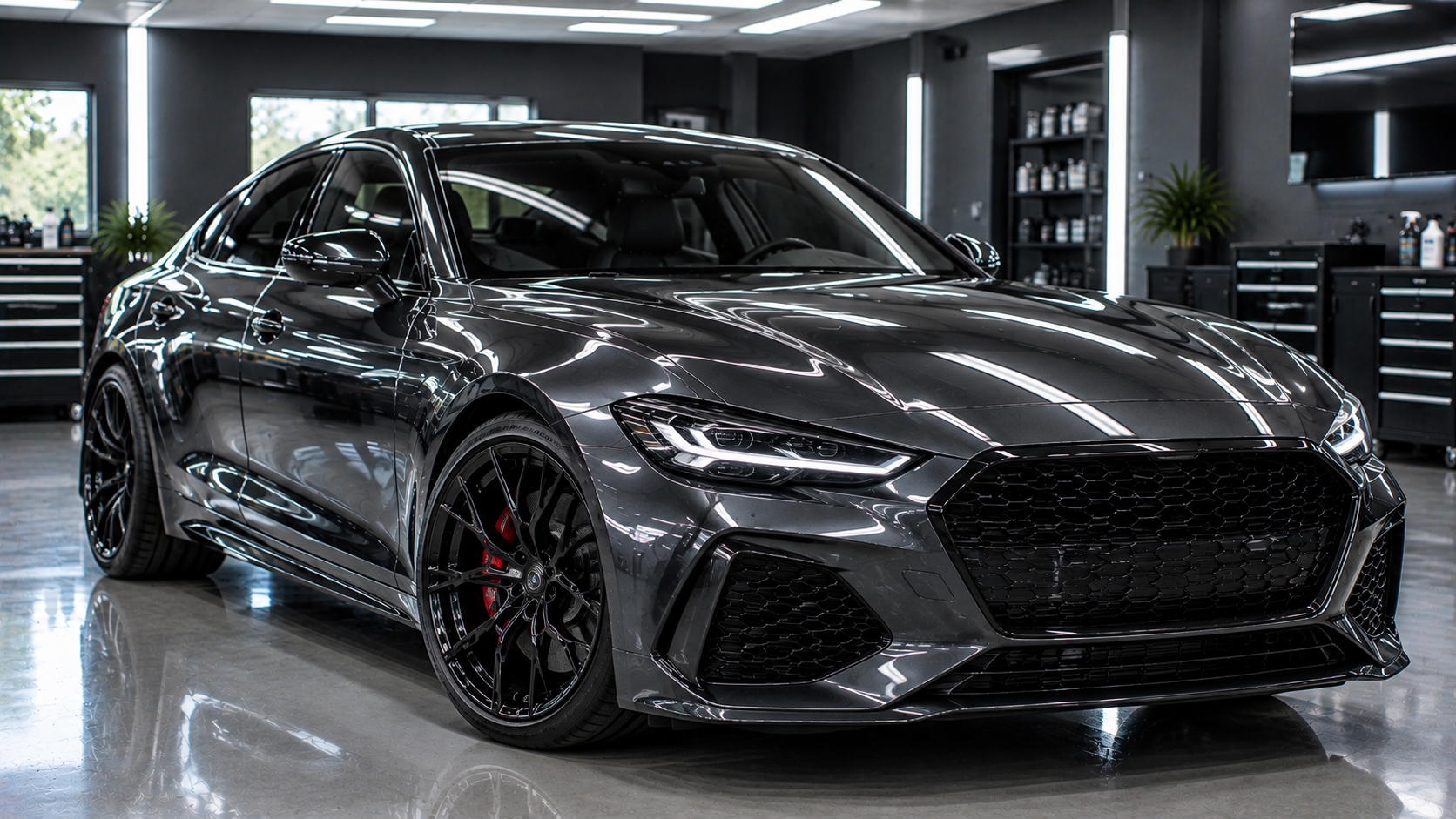
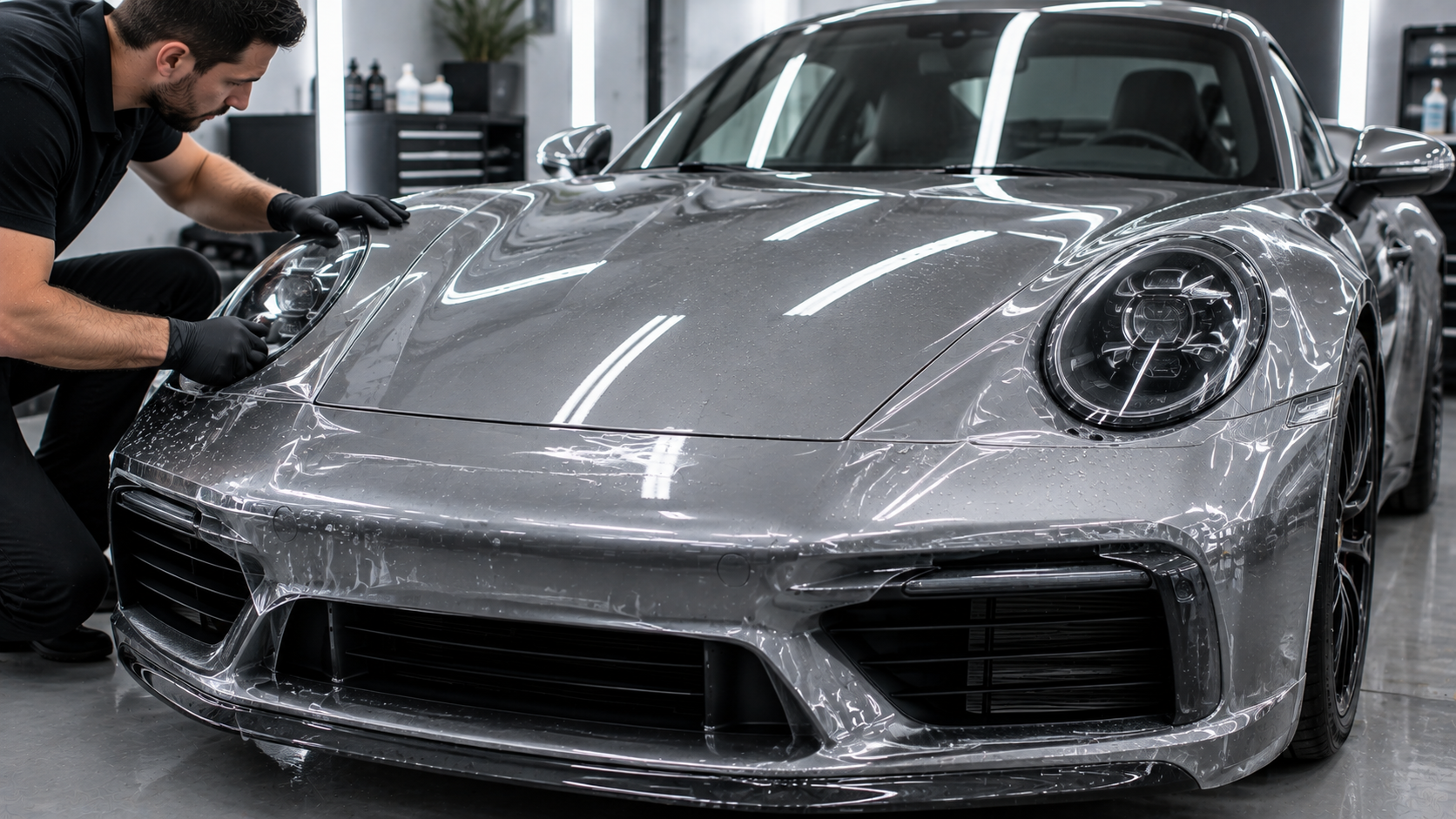
Adding a ceramic coating over paint protection film can make sense when the products are compatible and easier maintenance is one of your goals. It is not an automatic requirement for every film, and it does not make the car immune to damage. Before choosing both, compare what the film already provides, what the coating adds, and how you will care for the finished surface.
For Santa Clarita drivers considering protection for an I-5 commute or a weekend car, start with the panels you want covered. Then decide whether a coating belongs in the same plan. Pristine Auto Care’s paint protection film service page is a starting point for discussing coverage.
What does coating add to PPF?
PPF is a physical film over the covered surface. A compatible ceramic coating is a surface treatment that may improve water repellency and make routine cleaning easier. Those are different jobs: adding coating does not extend the film onto uncovered panels or turn it into a thicker barrier against impacts.
Ask what the specific film’s top coat already offers. Films vary, so a general claim that all uncoated PPF lacks stain resistance or water repellency is not a useful comparison. The installer should explain the added benefit of the proposed coating for that exact film, along with its cost and maintenance requirements.
Confirm compatibility before choosing a combination
Request the manufacturer and full product name for both the film and the coating. A product intended for automotive paint should not automatically be assumed suitable for film. Get the manufacturer’s instructions for the proposed combination, including preparation, application timing and aftercare.
Ceramic Pro’s KAVACA aftercare guidance discusses its PPF & Vinyl coating for its films. That is product-specific guidance, not permission to apply any coating to any brand of PPF. Ask which written guidance applies to the materials on your estimate.
If you want a matte or satin finish, discuss the intended appearance before application. Ask to see a sample of the proposed combination and confirm that both products are suitable for that finish. Do not assume a treatment advertised for extra gloss will produce the look you want.
Should you coat new film or existing film?
With new film, have the installer plan the sequence and explain when the car can be washed or exposed to the conditions described in the product instructions. There is no single waiting period that can safely be applied to every film-and-coating combination.
With existing PPF, bring any installation paperwork and identify its age and product name if known. Ask for an inspection of the surface, edges and any visible damage before approving coating. Point out staining, lifting, tears or previous repairs. A coating should not be presented as a repair for damaged film; discuss whether cleaning, further assessment or replacement is appropriate first.
Choose coverage before comparing package prices
Write down which panels matter most to you and ask for each proposal to identify them. Two quotes described as “PPF plus ceramic coating” can cover very different areas. One may include film on selected front panels; another may include a larger portion of the vehicle. Coating coverage can differ too.
Ask for the film, coating, preparation and any optional work to be itemized. Confirm whether the coating proposal applies to the film, exposed paint or other surfaces. Do not assume wheels, glass or trim are included. You can also review ceramic coating options when discussing protection for painted panels that will remain uncovered by film.
What will the combination not prevent?
Neither product makes the vehicle damage-proof. Coating does not replace film for physical coverage, and film cannot guarantee protection from every impact. Ask what any self-healing claim covers rather than assuming deep cuts, punctures or damage underneath the film will disappear.
Water repellency is also not a promise of a spotless surface. Keep an eye on contamination and water marks instead of leaving them until the next scheduled wash. Avoid treating a warranty duration as a guarantee against every type of wear or damage.
Plan maintenance before the car comes home
Request one written care plan for the installed combination. It should tell you when the first wash is allowed, which cleaners are approved and who to contact if a mark or edge concern appears. Coating does not remove the need to wash the vehicle or follow the film manufacturer’s instructions.
Manufacturer guidance differs by product. For example, XPEL’s product-care instructions separate several film lines and their care requirements. Use the instructions for your actual film rather than copying a washing schedule from a different product. Keep those instructions with your invoice and warranty documents.
Questions to bring to your estimate
- What are the exact film and coating products, and why are they suitable together?
- Which panels receive film, coating or both?
- What preparation is included, and does existing film need attention first?
- How will the combination look on my chosen gloss, matte or satin finish?
- What are the separate warranty terms, care requirements and follow-up arrangements?
To discuss a plan for your vehicle, request a PPF and ceramic coating estimate. Include your vehicle details, existing film information and coverage priorities so the recommendation can address your actual needs.