Ceramic Coating vs Paint Sealant: What’s the Difference?
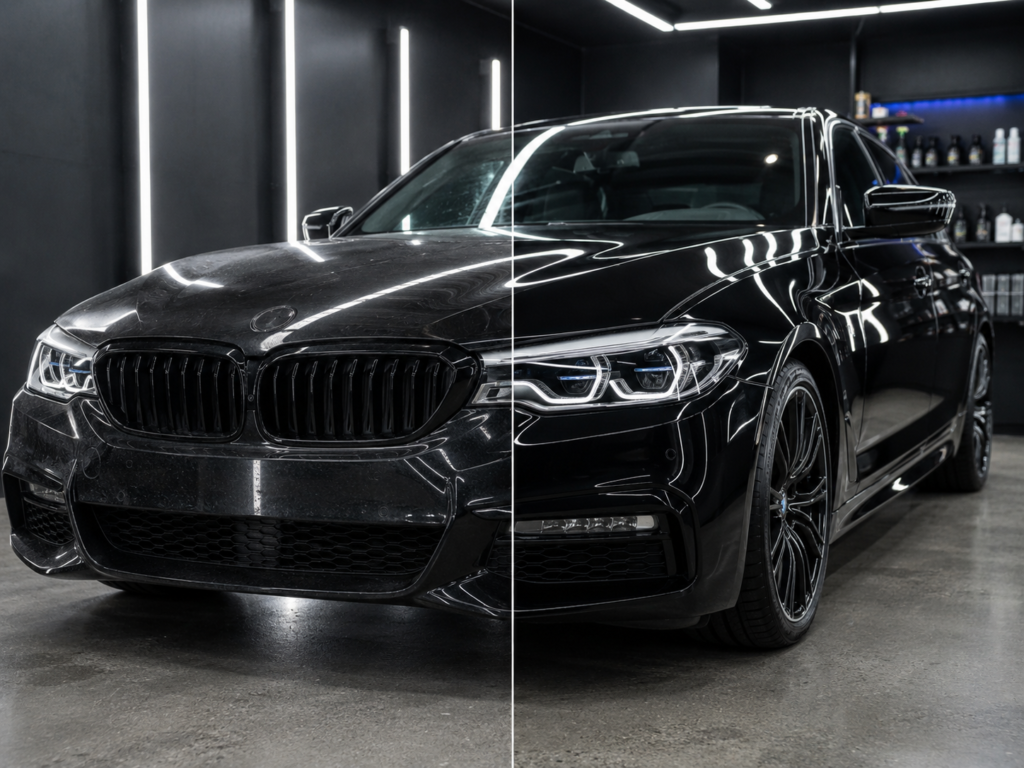
The main difference between a ceramic coating and a synthetic paint sealant comes down to chemical bonding, durability, and heat resistance. Synthetic paint sealants provide 4 to 6 months of surface protection by resting on top of the clear coat. In contrast, a ceramic coating chemically bonds with your factory paint, creating a hard, hydrophobic glass-like layer that lasts for multiple years. Both products outperform traditional carnauba wax, but understanding their distinct characteristics helps you decide which level of vehicle paint protection fits your driving habits and budget. Chemical Composition and Surface Bonding How a product adheres to your vehicle determines how well it shields the finish against the elements. Synthetic Paint Sealant: Formulated from liquid polymers and synthetic resins, sealants are engineered to sit over the clear coat. They adhere mechanically to surface pores, forming a temporary protective blanket. Because they do not form a chemical cross-link, everyday detergents and road friction wear them down within a few months. Ceramic Coating: Utilizing liquid silicon dioxide ($SiO_2$) or nanoceramic technology, a professional ceramic coating creates a covalent bond directly with automotive clear coat. It fills microscopic paint imperfections and cures into a rigid, semi-permanent barrier that cannot be rinsed or washed away. Durability and Lifespan Under Summer Heat Climate plays a decisive role in how long surface protection lasts. In the Santa Clarita Valley, persistent summer sun, triple-digit temperatures, and blowing dust place continuous stress on vehicle exteriors. Synthetic sealants offer decent UV protection and hold up better than organic wax, but thermal heat accelerates their breakdown. Parking outdoors daily in Valencia or Saugus often degrades a standard sealant within three to four months. A ceramic coating features high thermal resistance, meaning it will not soften, haze, or melt during hot summer afternoons. It shields factory clear coat against heavy UV radiation, industrial fallout, and acidic bird droppings for two to five years or longer when properly maintained. Hydrophobic Performance and Daily Maintenance Both products improve surface slickness, but their water-repelling capabilities differ significantly: Sealant Performance: Paint sealants create good surface tension, causing water to pool and roll off panels better than bare paint. However, road oils and airborne dust gradually stick to the polymer layer, requiring regular claying and reapplication. Ceramic Hydrophobicity: Ceramic coatings exhibit extreme hydrophobicity. Water beads into tight spheres that roll away with minimal airflow, carrying loose surface dust with them. This self-cleaning effect keeps your car cleaner between washes and drastically reduces the time needed for maintenance hand washes. Integrating routine Auto Detailing care ensures whichever protective layer you choose continues performing effectively. Upfront Cost vs. Long-Term Value Synthetic paint sealants carry a lower initial cost. They require basic decontamination and minimal prep work, making them a popular choice for short-term seasonal protection. However, re-applying a sealant three to four times a year creates ongoing labor and maintenance costs. A ceramic coating requires a larger upfront investment because of the rigorous surface preparation required. Technicians must perform machine paint correction to remove swirl marks and expose bare clear coat before application. While the initial cost is higher, the multi-year durability provides superior long-term value for drivers looking for durable, hassle-free protection. Explore our dedicated Ceramic Coating to see available package options. Frequently Asked Questions Can you apply a paint sealant on top of a ceramic coating? It is not recommended. Applying a synthetic sealant over a ceramic coating masks the coating’s advanced hydrophobic surface tension and attracts more dust. If you want to boost a ceramic coating, use a dedicated silica-based ($SiO_2$) maintenance spray instead. Is a paint sealant better than carnauba wax? Yes. Synthetic sealants last significantly longer than carnauba wax (up to six months compared to a few weeks) and offer superior resistance to heat and detergent washes. However, neither provides the multi-year durability of a ceramic coating. Looking for Ceramic Coating in Santa Clarita? Pristine Auto Care provides professional paint correction and ceramic coating installations designed to shield your vehicle’s finish against the harsh California sun.